Source Battery Powered Glass Suction Lifter for Factory Use
Find 30 battery powered glass suction lifter options for glass curtain walls, wood plates, and aluminum factories. Compare capacities from 200kg to 3000kg, electric or manual controls, and ISO CE certified models from Henan, China suppliers; compare the available evidence and request quotations based on your requirements.
Key considerations
Products List




Comprehensive Sourcing Guide
Battery Powered Glass Suction Lifter Sourcing Guide
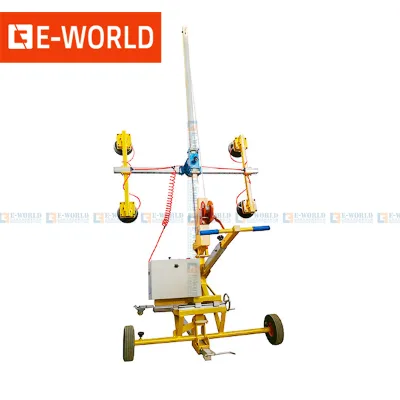
Procurement professionals evaluating battery-powered glass suction lifters must first distinguish between manual and electric drive modes, as the supplied data indicates a clear market split between flexible manual units and fully electric systems. Buyers should verify whether the specific unit requires a 24V or 380V power system, noting that some models utilize dual 12V batteries while others rely on AC charging inputs. This distinction fundamentally alters the operational workflow and site preparation requirements for the lifting task.
The observed product range includes specialized units designed for glass curtain walls and wood plates, with suction cup diameters varying from 200mm to 300mm to accommodate different glass thicknesses. Sourcing teams must confirm the lifting height capabilities, as observed listings show capacities reaching up to 3500mm, which is critical for high-rise construction projects. Understanding these physical constraints ensures the selected equipment matches the specific architectural demands of the job site without requiring additional rigging solutions.
Product Scope and Observed Listing Signals
Buyers analyzing market listings will encounter a wide price spectrum ranging from $5 to $35,000, reflecting significant variations in capacity, automation level, and brand positioning. The minimum order quantity is typically low, often starting at a single unit, which allows for pilot testing before committing to larger fleet acquisitions. However, the substantial price variance suggests that buyers must scrutinize the included accessories, such as remote controls and specific battery configurations, to understand the true value proposition of each listing.
Product descriptions frequently highlight customization options for color and specific cup quantities, with observed models offering either six or eight suction cups depending on the load requirements. The packaging is consistently noted as wooden cases, which is a vital detail for logistics planning and ensuring the equipment arrives undamaged. Procurement teams should verify if the "customized" color option is a standard feature or a premium add-on, as this can impact lead times and overall project costs.
Technical Specifications to Verify
Technical due diligence requires confirming the exact lifting capacity, as observed data lists safety loading capacities ranging from 200kg to 3000kg with specific models rated for 800kg. Buyers must verify the maximum safety factor, which is cited as three times the dead load, to ensure compliance with rigorous safety standards during heavy glass handling operations. The dead load of the unit itself, observed at 180kg in some configurations, must be factored into the total lifting calculation to prevent overloading the machine.
The power system architecture is another critical verification point, with listings indicating options for 24V/1500W motors or 380V/DC12V systems. It is essential to confirm the battery specifications, such as the 2x12V/100ah configuration, to ensure sufficient runtime for a full work shift without interruption. Additionally, the overall width of 810mm and the specific glass size compatibility of 3660*2440mm must be checked against the physical dimensions of the glass panels to be lifted.
Compliance and Safety Documentation
Safety compliance is paramount when sourcing lifting equipment, and buyers should verify the presence of ISO and CE certifications for all proposed units. These certifications indicate that the manufacturer adheres to international safety standards regarding electrical systems and mechanical integrity, which is non-negotiable for workplace safety. Procurement teams must request current certification documents to ensure they are valid and not expired, as this directly impacts liability and insurance coverage during operations.
The operational safety features, such as the ability to flip 90 degrees and rotate 360 degrees, must be validated through functional testing or detailed technical manuals. Buyers should also confirm the availability of a solution within 6 to 12 hours for any safety-related issues, as rapid response is crucial when equipment malfunctions on a busy construction site. Ensuring that the safety loading capacity is clearly marked and understood by all operators is a fundamental requirement for preventing accidents.
Cost Drivers and Commercial Terms
The total cost of ownership is heavily influenced by the lead time, which is observed to range between 7 to 15 days for standard orders. Buyers must account for this production window when planning project schedules, as delays in delivery can stall critical glass installation phases. Additionally, the capacity options, which include 300kg, 400kg, 500kg, 600kg, and 800kg variants, will directly impact the unit price, requiring a precise match between the required load and the purchased model.
Commercial terms should explicitly address the warranty period, which is typically 12 months for these industrial lifting devices. Procurement contracts must clarify the scope of after-sales service, including whether online support covers troubleshooting or if on-site visits are required for complex repairs. Understanding the charging requirements, such as AC220V inputs, is also essential for budgeting the necessary electrical infrastructure at the job site.
Supplier Qualification and Quality Control
Supplier qualification should focus on verifying the origin of the equipment, with observed data pointing to manufacturers in Henan, China. Buyers must assess the supplier's production capacity, which is listed as accommodating various load capacities, to ensure they can meet volume demands without compromising quality. It is advisable to request evidence of their manufacturing process and quality control protocols to confirm that the "new" condition of the equipment is maintained throughout the supply chain.
Quality control checks should include a review of the product model numbers, such as VLNE600KG, to ensure consistency across the ordered fleet. Buyers should verify that the suction cup sizes, whether 200mm or 300mm, are uniform and compatible with the specific glass types being handled. Establishing a clear communication channel for technical support is vital, as the supplier must be able to provide immediate assistance if the electric or manual control systems fail during operation.
Long-Term Procurement Checks
Long-term procurement strategies must prioritize the availability of spare parts and the durability of the battery system, which is a critical component of the electric drive mode. Buyers should inquire about the expected lifespan of the 2x12V/100ah batteries and the cost of replacements to calculate the total cost of ownership over several years. Ensuring that the supplier can provide a steady supply of replacement parts is essential for minimizing downtime and maintaining operational efficiency.
Finally, buyers should establish a protocol for regular maintenance and inspection to extend the service life of the glass suction lifters. The observed capability to handle glass moving and lifting in glass factories suggests that these units will undergo heavy use, making a proactive maintenance schedule necessary. Procurement teams should also monitor the supplier's ability to provide updated solutions within the 6 to 12-hour window, ensuring that any long-term operational challenges are addressed promptly.
FAQs
What is the lifting capacity range for this glass vacuum lifter?
The lifting capacity ranges from 200kg to 3000kg depending on the specific model configuration. Standard options include capacities of 300, 400, 500, 600, and 800kg. This flexibility allows users to select the appropriate unit for various glass sizes and weights, ensuring safe handling in factory environments.
How is the power system configured for operation?
The device utilizes a dual power system featuring a 24V/1500W driving motor and a battery setup of 2x12V/100ah. It supports charging via AC220V or DC12V inputs. This configuration ensures reliable electric drive mode operation, allowing for flexible usage in different industrial settings without immediate reliance on external power sources.
Can the suction cups be adjusted for different glass sizes?
Yes, the suction cups offer significant adjustability with a diameter of 300mm and functions including 90-degree flipping and 360-degree rotation. The system supports glass sizes up to 3660x2440mm. This design enables precise positioning and secure gripping for various glass curtain wall and wood plate applications during lifting tasks.
What safety features are included in the vacuum lifter?
The lifter incorporates a maximum safety factor of three times the dead load, which is specified as 180kg. It features a safety loading capacity of up to 800kg for specific models. These engineering standards ensure secure handling of heavy glass loads, minimizing risks during manual or electric control operations in industrial environments.
What is the lead time for ordering this equipment?
The standard lead time for production and delivery is between 7 to 15 days. This timeframe applies to orders placed for the glass vacuum lifter models available from the supplier. Buyers should account for this duration when planning procurement schedules, as it reflects the typical manufacturing and preparation period for new units.
Is customization available for the color and specifications?
Customization is available for color requirements and specific operational needs. Buyers can request tailored solutions to match their factory aesthetics or functional preferences. The supplier provides online support and aims to deliver a solution within 6 to 12 hours for inquiries. This flexibility ensures the equipment integrates smoothly into existing workflows.